
Cigar Sizes Explained: The Complete Guide to Vitolas and Ring Gauges

Walk into any premium cigar shop and you'll face a wall of different sizes, shapes, and names: Robusto, Churchill, Toro, Torpedo, Corona, Belicoso. If you're not sure what any of these mean — or why they matter — you're not alone. Cigar sizes, known as vitolas, are one of the most important factors in your smoking experience, affecting burn time, draw, flavor development, and complexity. This guide breaks down everything you need to know.
What Is a Vitola?
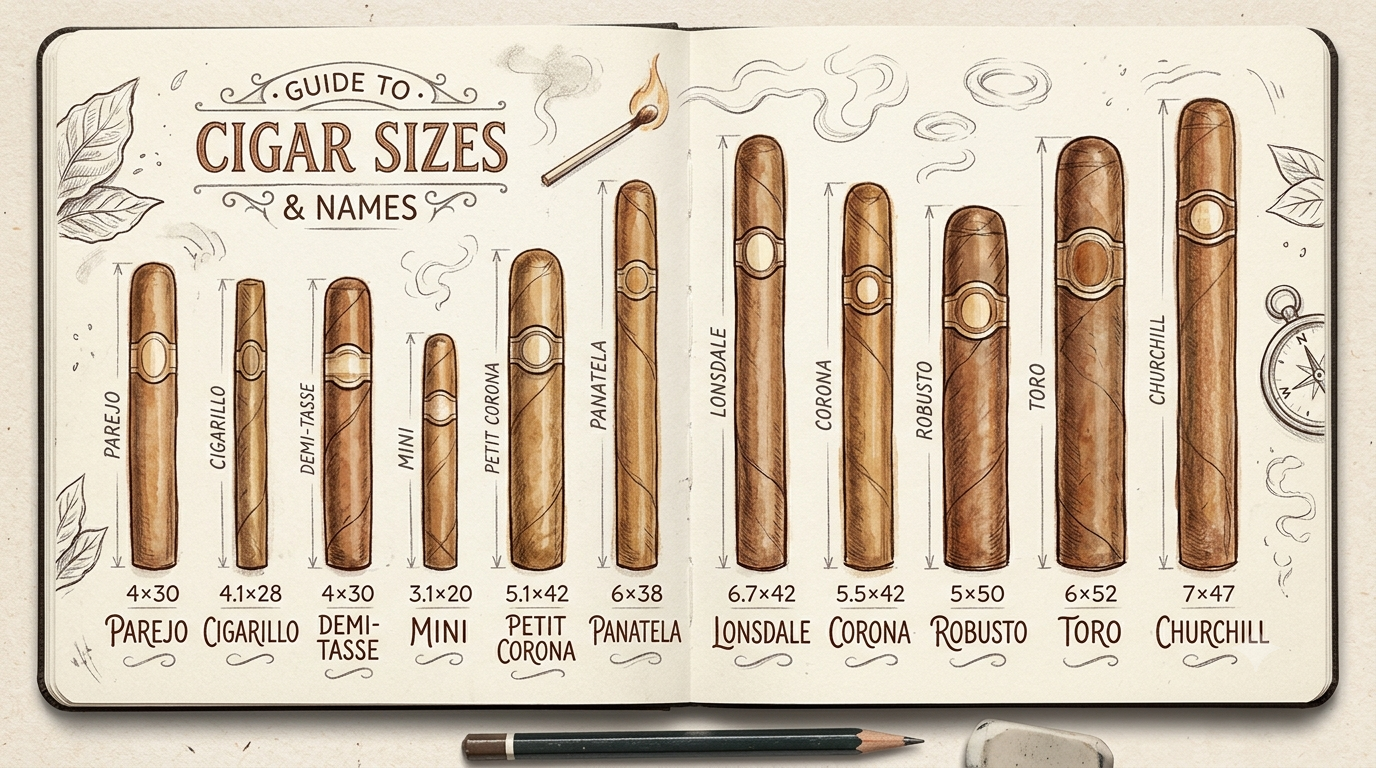
A vitola is the term used to describe a cigar's shape and size. Every vitola is defined by two measurements: length (in inches) and ring gauge (diameter measured in 64ths of an inch). A 5 × 50 Robusto, for example, is 5 inches long with a ring gauge of 50/64ths of an inch in diameter.
Ring gauge matters more than most newcomers realize. A thicker cigar burns cooler and slower, allowing the tobacco to develop more layers of flavor as you smoke. A thinner cigar burns hotter and faster, delivering a more intense, concentrated experience. Neither is objectively better — they serve different moods, moments, and palates.
The Most Popular Cigar Sizes
Robusto (4¾–5½ × 48–52)

The Robusto is the single most popular cigar format in the world, and for good reason. It hits a sweet spot of roughly 45–60 minutes of smoking time — long enough to enjoy a complex smoke, short enough to finish before dinner. The ring gauge (typically 50–52) is wide enough to deliver full flavor without burning hot.
If you're looking for a benchmark Robusto, the Arturo Fuente Don Carlos Robusto is one of the most acclaimed examples in the world — a medium-bodied, African Cameroon-wrapped masterpiece that exemplifies everything the format does well.
Toro (6–6½ × 50–54)

The Toro is essentially a longer Robusto, giving you an extra inch or more of smoking time (typically 60–90 minutes). That extra length allows the tobacco to open up more gradually, making Toros a favorite for leisurely weekend smokes or post-dinner sessions. The Arturo Fuente Double Chateau Natural is a classic cedar-sleeved Toro worth every minute.
Churchill (7–7½ × 46–50)

Named after Sir Winston Churchill — a man legendary for his love of large cigars — the Churchill is a long, relatively slender vitola that produces a cool, refined smoke over 90 minutes or more. The narrower ring gauge (relative to its length) emphasizes the wrapper leaf's contribution to flavor, making wrapper selection especially important in this format. The Arturo Fuente Gran Reserva Churchill Maduro is a premier example: Connecticut Broadleaf wrapper over aged Dominican long-filler, producing rich cocoa and cedar notes throughout its hour-and-a-half burn.
Torpedo / Belicoso (6–6½ × 46–54, tapered head)

Both the Torpedo and Belicoso feature a pointed or tapered head rather than the flat cap of a Parejo (straight-sided) cigar. This taper concentrates smoke and flavor at the draw, making the first third noticeably more intense than it would be in a Robusto or Toro of similar size. Aficionados prize these shapes for their complexity and precision.
The Arturo Fuente Don Carlos No. 2 Torpedo is one of the most sought-after examples — a rare, medium-bodied blend that earned "Cigar of the Year" recognition and remains a benchmark for the format. The Aging Room Quattro Nicaragua Maestro is another exceptional box-pressed Torpedo worth exploring, offering notes of dark chocolate, toasted nuts, and a sweet, creamy finish.
Corona (5½–6 × 42–44)

The Corona is one of the oldest and most traditional cigar formats. With a narrower ring gauge than modern favorites, Coronas burn hotter and with more intensity per puff — a format that rewards patient, slow smoking. They're excellent morning cigars or daytime smokes when you want complexity without a long time commitment.
Lancero / Panatela (7–7½ × 38–42)

Long and slender, the Lancero is the format most demanding of the cigar maker's craft. With so little tobacco at that diameter, any inconsistency in the blend is immediately noticeable. When done well, Lanceros are sublime — they emphasize the wrapper leaf above all else and deliver a cooler, more nuanced smoke than wider formats. These are advanced vitolas best appreciated by experienced smokers.
Presidente / Giant (7½–10 × 50–60)

For those who want the full experience — a smoke that lasts two hours or more — the Presidente and similar giant formats deliver. These are celebration cigars: the ones you reach for after a major life event or when you have nowhere to be for the next two hours. The thick ring gauge and generous length mean the tobacco has maximum time to evolve across thirds.
Box-Pressed vs. Round: Does Shape Matter?

Beyond the standard round Parejo, many cigars are box-pressed — gently squared off during aging to produce a rectangular cross-section. Box-pressing slightly changes the draw and burn characteristics (the four corners cool slightly faster than the center), and many aficionados feel it promotes a more even burn and slightly different flavor profile. The Aging Room Quattro Nicaragua Maestro is a great example of a box-pressed Torpedo done right.
How to Choose the Right Size for You
A few practical questions to guide your choice:
- How much time do you have? A Robusto is 45–60 minutes. A Churchill is 90+ minutes. Match the cigar to your schedule.
- Are you a beginner? Start with a Robusto or Toro in the mild-to-medium range. The wider ring gauge burns cooler and is more forgiving of imperfect puffing cadence.
- Do you like wrapper-forward cigars? Go thinner — Corona, Lancero, or Churchill. The wrapper accounts for a larger proportion of the total smoke.
- Do you prefer blend complexity? Go wider — Robusto, Toro, or Presidente. The thicker ring gauge lets binder and filler tobaccos fully express themselves.
- Special occasion or daily smoke? Save the Giants and Churchills for special moments. Keep Robustos stocked for everyday enjoyment.
Ring Gauge: The Number That Changes Everything
If you remember just one thing from this guide, make it this: ring gauge is the single biggest factor in how a cigar smokes. Modern premium cigars trend toward larger ring gauges (54–60+) because they burn cooler, draw easier, and deliver more tobacco complexity. Classic cigar enthusiasts often prefer the 42–50 range for its more focused, wrapper-driven experience. Neither camp is wrong — understanding the difference simply helps you make smarter buying decisions.
Browse Cigars by Format at Santa Monica Cigars
Whether you're searching for a perfect weekday Robusto, a weekend Churchill, or a special-occasion Torpedo, Santa Monica Cigars carries an expertly curated selection across every format and strength. Our team selects only premium, hand-rolled cigars from the world's finest blenders — including Arturo Fuente, Aging Room, Padron, and more.
Browse our full cigar collection and find your next favorite vitola. Still not sure where to start? Visit us in Santa Monica — we're always happy to help you find the perfect match for your palate and occasion.
This post is intended for adults of legal smoking age (21+). Please enjoy premium cigars responsibly.