

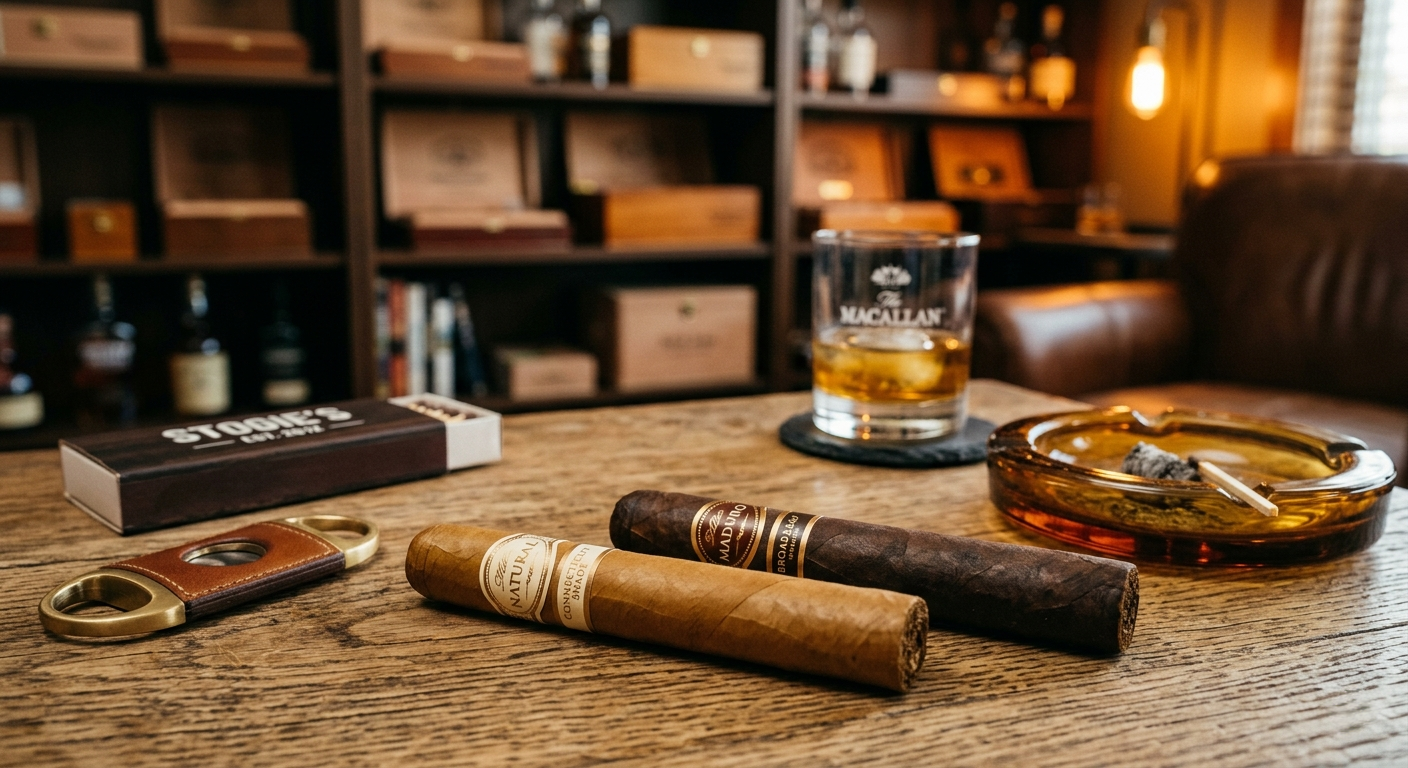
Maduro vs. Natural Cigars: What's the Real Difference?
Walk into any cigar shop and you'll see the same cigar offered two ways: Maduro and Natural. Same brand, same size, same band — but a different wrapper leaf, and often a completely different smoking experience. If you've ever wondered what the difference between a Maduro and a Natural cigar actually is, and which one you should reach for, this guide breaks it down.

What the Wrapper Does
The wrapper is the single outermost leaf of a cigar, and it punches far above its weight. Many blenders estimate the wrapper contributes a large share of a cigar's flavor — some say more than half on smaller ring gauges. It's the leaf that touches your lips, the first thing you smell, and the layer that burns alongside every draw. That's why the same blend in two different wrappers can taste like two different cigars.
What Is a Natural Wrapper?
A Natural wrapper (sometimes called Claro or EMS) is a tobacco leaf that's been air-cured and fermented for a standard period, leaving it light tan to medium brown. Naturals tend to deliver:
- Brighter, drier flavors — cedar, almonds, leather, cream, white pepper
- More of the binder and filler character — the wrapper steps back and lets the blend speak
- A crisper finish that pairs beautifully with coffee or a lighter whisky
A classic example from our shelves: the Padrón 1926 No. 9 Natural, where the sun-grown Nicaraguan wrapper shows off the blend's signature cocoa and nut character without adding extra sweetness.
What Is a Maduro Wrapper?
Maduro means "ripe" in Spanish, and that's the idea. Maduro wrappers are fermented longer and at higher temperatures, which darkens the leaf to deep brown or near-black and converts more of its starches into natural sugars. The result:
- Sweeter, richer flavors — dark chocolate, espresso, molasses, dried fruit
- A heavier mouthfeel with a longer, dessert-like finish
- A toothy, oily appearance that many smokers find irresistible
Try the same cigar in its dark dress — the Padrón 1926 No. 9 Maduro — and you'll taste the difference immediately: more cocoa sweetness, more coffee, more weight on the palate.

Maduro vs. Natural: Common Myths
Myth 1: Maduros are stronger
Darker doesn't mean stronger. Strength comes from the filler tobaccos (especially ligero leaves), not the wrapper's color. Plenty of Maduros are medium-bodied and smooth, while some light-wrapper cigars will sneak up on you. Maduros are usually richer, not necessarily stronger.
Myth 2: Maduro wrappers are dyed or artificially darkened
Quality Maduros get their color from extended natural fermentation — heat, moisture, and time. On premium cigars, that color is earned, not painted on.
Myth 3: Naturals are for beginners, Maduros are for veterans
There's no ladder you're supposed to climb. Many newcomers actually prefer Maduros because the natural sweetness is approachable, while lifelong smokers may stick to Naturals for their nuance. Smoke what tastes good to you.

How to Choose Between Them
A few quick guidelines:
- Morning smoke with coffee? A Natural's brighter profile won't overwhelm your palate.
- After dinner with bourbon or rum? A Maduro's chocolate-and-espresso sweetness is built for it.
- New to cigars? Pick one cigar offered in both wrappers and try them side by side a week apart. It's the single best way to learn what the wrapper contributes.
- Hot day on the patio? Naturals tend to feel lighter and more refreshing; save the Maduro for the evening.
Try Them Side by Side
The best education in tobacco is a head-to-head comparison, and few lines make it easier than Padrón, which offers nearly every vitola in both wrappers. Pick up a 1926 No. 6 Natural and a 1926 No. 6 Maduro, smoke them a few days apart, and you'll never need to ask the difference again.
Browse our full selection at Santa Monica Cigars — and if you're ever unsure which wrapper suits your taste, stop by the shop or reach out. We're happy to point you to the right stick.
For adults of legal smoking age (21+).