

How to Cut and Light a Cigar the Right Way: A Beginner's Guide

Learning how to cut and light a cigar the right way is the single biggest factor separating a smooth, flavorful smoke from a bitter, uneven one. It sounds simple, but a bad cut or a rushed light can ruin an otherwise great cigar before you've even taken your first draw. Whether you just picked up your first stick or you're brushing up on fundamentals, here's a step-by-step guide to cutting and lighting a cigar like someone who's been doing it for years.
Why Cutting and Lighting Matters

A cigar is a tightly rolled bundle of filler, binder, and wrapper leaf, and how you open and ignite it directly affects airflow, draw, and burn. Cut too little and you'll struggle to pull smoke through; cut too much and the wrapper can unravel. Light unevenly and one side of the cigar will burn hotter than the other, creating a "canoe" that runs crooked and tastes harsh. Getting these two steps right takes less than two minutes and makes every cigar you smoke noticeably better.
Step 1: Choose the Right Cutter
There are three common ways to open a cigar:
Guillotine cutter — the most popular choice, especially for beginners. A double-blade guillotine gives a clean, even cut across the cap in one motion.
Punch cutter — removes a small circular plug from the cap, leaving more wrapper intact. Punches work well on smaller ring gauges but can restrict draw on bigger cigars.
Cigar scissors — favored by traditionalists for precision, though they take a bit more practice to use cleanly.
Whichever style you choose, keep the blade sharp. A dull cutter tears the wrapper instead of slicing it, which can cause the cap to unravel as you smoke.
Step 2: How to Cut a Cigar Properly
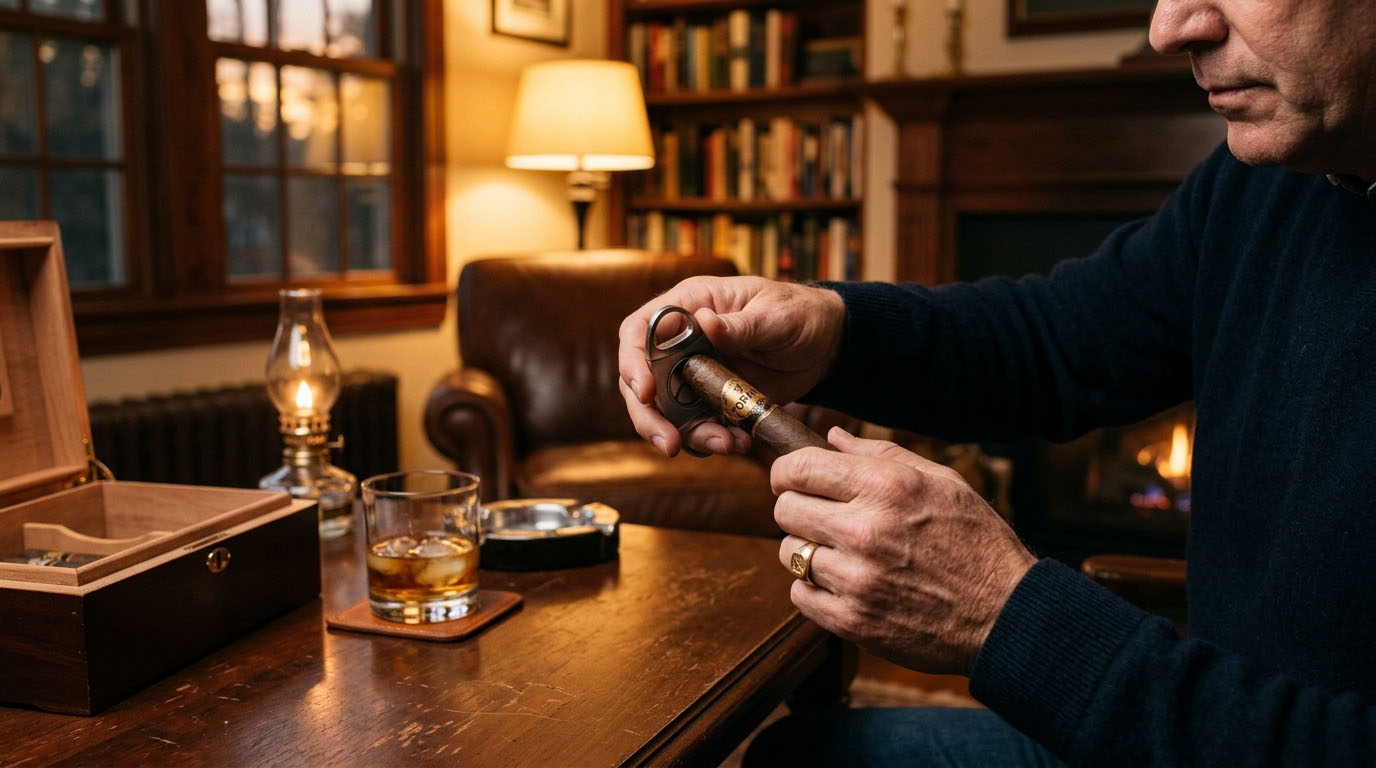
Look at the cap end of the cigar — the rounded tip — and find the "shoulder," where the rounded cap meets the straight body. You want to cut just above that shoulder line, leaving enough of the cap intact to hold the wrapper together while opening enough surface area for a good draw.
A good rule of thumb: remove no more than 1/16 to 1/8 of an inch. If you're using a guillotine, rest the cigar lightly in the cutter, line up the blade above the shoulder, and cut in one quick, confident motion. Hesitating or sawing back and forth is what causes ragged, torn cuts.
After cutting, take a dry draw (no flame) to confirm the airflow feels open but not loose. If it's too tight, you can trim a hair more — but you can't undo an overly aggressive cut, so it's always better to start conservative.
Step 3: Toast the Foot Before You Light
The "foot" is the open end of the cigar you'll actually light. Before applying flame directly, hold the cigar at a 45-degree angle just above (not touching) your flame source and rotate it slowly. This toasts the tobacco evenly around the entire circumference and pre-warms the leaf, which makes for a much more even light in the next step.
Step 4: How to Light a Cigar the Right Way
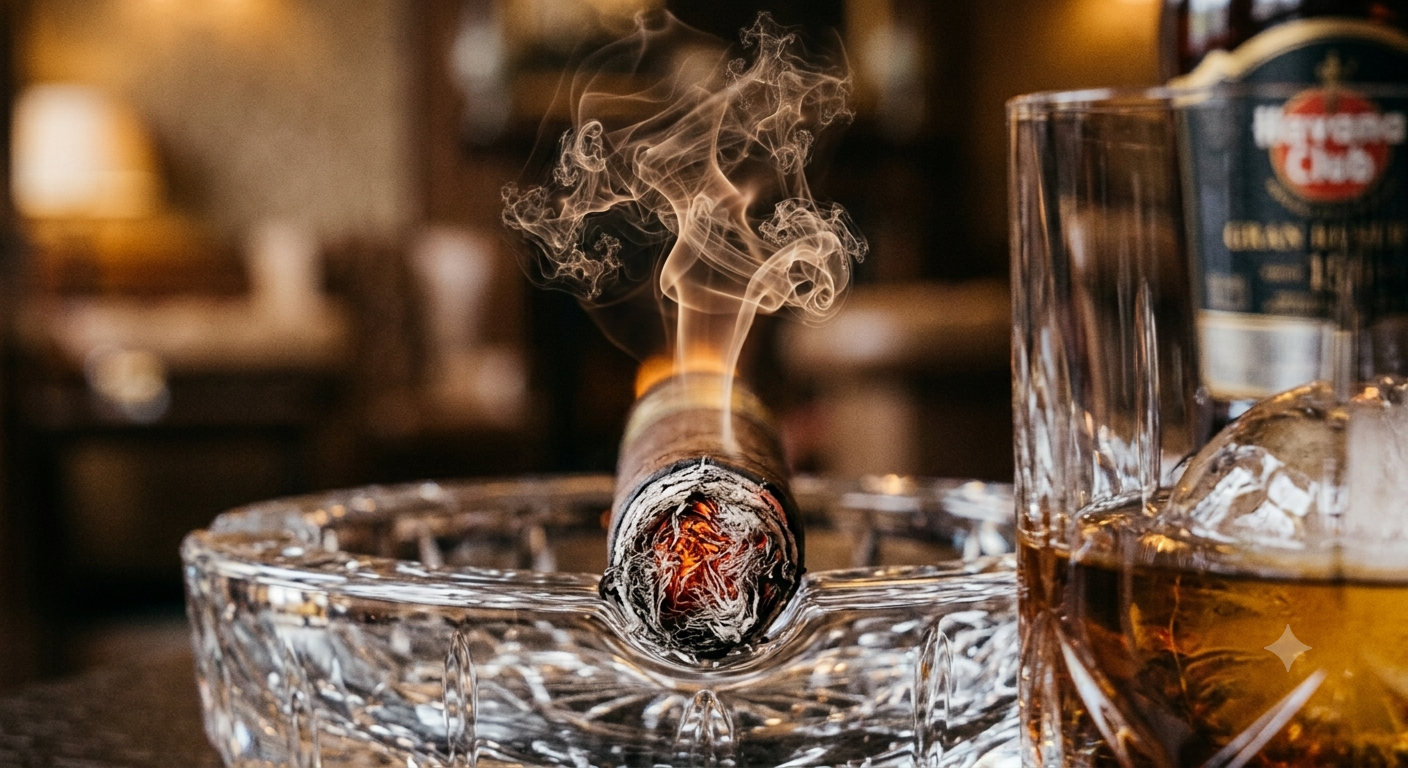
Once the foot is toasted and glowing faintly orange, bring the cigar to the flame at that same 45-degree angle and draw gently while rotating it continuously. You're not trying to torch it — you're coaxing an even ember across the entire foot. Check your work by looking at the lit end: it should glow uniformly all the way around, not just on one side.
On lighter choice: a butane torch lighter is the standard for a reason — it burns hot, clean, and windproof, without the sulfur taste that matches or lighter fluid can leave behind. If you only have matches, let the sulfur burn off fully before bringing the flame near the cigar.
Common Mistakes Beginners Make

A few small errors account for most disappointing first cigars:
Puffing too fast. Cigars aren't cigarettes — a relaxed puff every 30 to 60 seconds keeps the burn cool and the flavor from turning bitter.
Skipping the toast step. Jumping straight to lighting without toasting the foot is the most common cause of an uneven burn.
Over-cutting. Taking off too much of the cap loosens the wrapper and can cause it to unravel mid-smoke.
Relighting incorrectly. If your cigar goes out, gently tap off the loose ash, blow through the cigar to clear stale smoke from the foot, then re-toast before relighting.
Choosing Your First Cigar
If you're still building confidence with cutting and lighting, practice on a milder, well-constructed cigar rather than a dense, oily full-body stick — a poor cut matters less when the burn characteristics are forgiving. Mild to medium options from Oliva or Arturo Fuente are excellent starting points: consistent construction, approachable flavor, and a draw that's easy to read while you're still learning the fundamentals.
Ready to Put It Into Practice
Cutting and lighting a cigar correctly takes a few tries to feel natural, but once it clicks, you'll notice the difference in every smoke from here on out. Browse our full cigar selection at Santa Monica Cigars to find a well-constructed stick to practice on, or explore our Padron and Romeo y Julieta collections for your next box.
This article is intended for adults of legal smoking age (21+). Cigar smoking carries health risks, and this content is for general educational and lifestyle purposes only.