
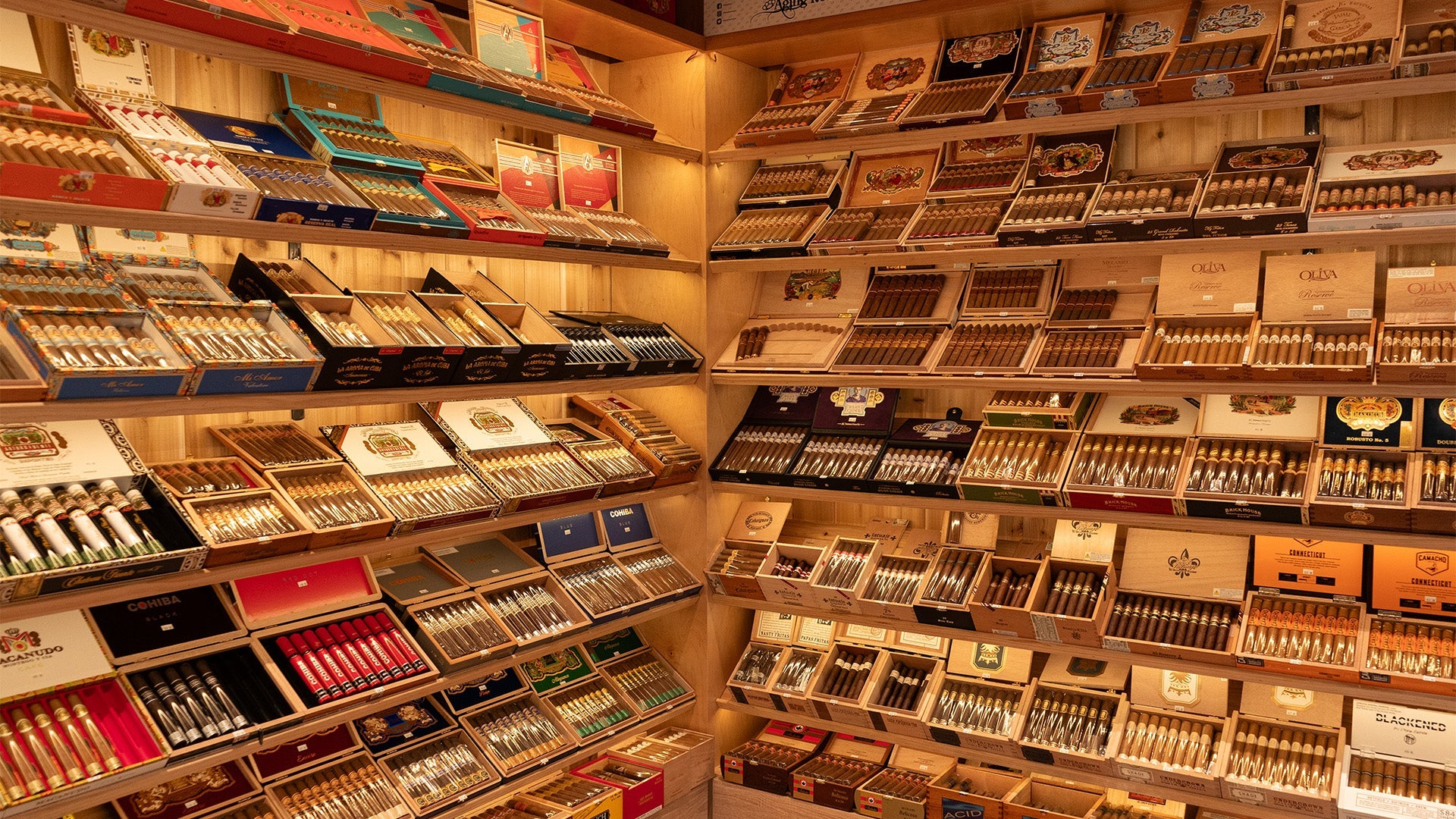
Premium Cigars in Santa Monica: An Insider's Guide for 2026
By the team at Santa Monica Cigars
If you live in West LA and you've ever tried to figure out where to actually buy a premium cigar — not a gas-station gimmick, not a flavored tube of leaves, but a real hand-rolled, properly-aged, climate-controlled cigar — you already know the search isn't easy. Most "smoke shops" in Santa Monica and the broader Westside carry the same dusty cellophaned inventory that's been sitting under fluorescent lights for who knows how long. Online warehouses ship faster but treat cigars like pencils: pulled from a dry shelf, bagged, gone.
This guide is for the person who wants to do this right. Whether you've smoked a hundred cigars or you're about to light your first, this is what we'd tell you if you walked into our shop on Broadway and asked us where to start.
We've been hand-curating premium cigars in Santa Monica for years. We carry roughly 200 different SKUs at any given time — every one of them tasted, evaluated, and approved by someone on our team before it goes on the shelf. We don't carry brands we don't believe in. That's the lens we're writing this from.
Let's get into it.

What "Premium" Actually Means in the Cigar World
The word "premium" gets thrown around so casually that it's almost meaningless in most retail contexts. In the cigar world, premium has a specific meaning. A premium cigar is:
Hand-rolled. Not machine-made. The roller (a torcedor) hand-bunches the filler tobacco, applies the binder leaf, and finishes with the wrapper — all by hand, one cigar at a time. Machine-made cigars, by contrast, are pressed into uniform shapes by industrial equipment and use shorter-cut filler tobacco. The construction quality difference shows up in burn evenness, draw consistency, and flavor depth.
Made from long-filler tobacco. Long-filler means the tobacco leaves run the full length of the cigar. This produces an even burn, holds ash properly, and lets the flavor develop in clean transitions from light to nub. Short-filler (chopped tobacco) burns inconsistently, often too hot, and tastes muddier.
Aged. Quality tobacco is aged for years before it's rolled into a cigar — and the rolled cigar itself is often aged further. The Padron 1964 line, for example, uses tobacco aged a minimum of four years. The Padron 1926 uses tobacco aged at least five. Aging mellows the harshness of fresh tobacco and develops the complex, layered flavors that distinguish a great cigar from a forgettable one.
Properly humidified at every stage. A premium cigar that's been allowed to dry out in transit or storage is no longer a premium cigar. Climate control matters from the factory floor to your humidor.
When you buy a premium cigar, you're paying for those four things — not just for marketing.

Why Buying Premium Cigars in California Is Genuinely Different
Three things make California — and specifically Santa Monica and the Westside — a unique market for premium cigars.
California's tobacco taxes. California has some of the highest other-tobacco-products (OTP) taxes in the country. That tax is paid at the wholesale level and passed down to the consumer. The same Padron 1964 Anniversary Exclusivo that costs $14 in Florida costs more in California. There's no way around this unless you want to break the law (don't). It's the cost of doing business in a state with serious health policy. We mention it not to complain but to set expectations: if you compare California cigar prices to Florida or Pennsylvania prices, California will always look high. It's not because shops are gouging — it's because the state takes its cut before we ever see the cigars.
SoCal's climate is hostile to cigars. Santa Monica averages 35–55% humidity year-round. The relative humidity inside a humidor needs to be 65–72% for cigars to stay properly hydrated. That means every premium cigar in your collection is constantly trying to dry out and equalize with the room air. A cigar left out on a desk in Santa Monica for 24 hours will lose meaningful moisture. Three days, it's flat. A week, it's ruined. Storage isn't optional here — it's the difference between a $20 cigar that's worth smoking and a $20 cigar you've effectively thrown away.
The audience is sophisticated. Westside LA — Santa Monica, Beverly Hills, Pacific Palisades, Brentwood, Westwood — is one of the most cigar-knowledgeable consumer bases in the country. Customers here have smoked Cubans in Havana, Padrons in Estelí, Davidoffs in Geneva. They know the difference between an Ecuadorian Habano wrapper and a Cameroon. The bar for a serious cigar shop is set higher here than in most American markets, which is exactly how it should be.
These three factors mean that if you're buying premium cigars in Santa Monica, you should expect to pay slightly more than national average — but you should also expect significantly better service, fresher product, and more knowledgeable staff than you'd get from a warehouse retailer in another state.

The Anatomy of a Premium Cigar (and Why It Matters)
A cigar is made of three components: the filler (the inner tobacco that makes up the bulk of the cigar), the binder (the leaf that holds the filler together), and the wrapper (the outer leaf you see).
The filler determines most of the strength and the core flavor profile. Filler tobacco is grown in different regions — Nicaragua, Honduras, Dominican Republic, Mexico, Brazil — and each region produces tobacco with different characteristics. Nicaraguan filler tends toward pepper, espresso, and earth. Dominican filler is generally smoother and creamier. Honduran filler sits somewhere in the middle, often with a sweeter, woodier character.
The binder is structural but also flavor-relevant. A skilled blender chooses a binder that complements the filler — not too dominant, but adding subtle character.
The wrapper is the leaf you see, and it accounts for a surprising percentage of the cigar's flavor (some experts estimate 40 to 60 percent). The most common premium wrapper categories you'll encounter:
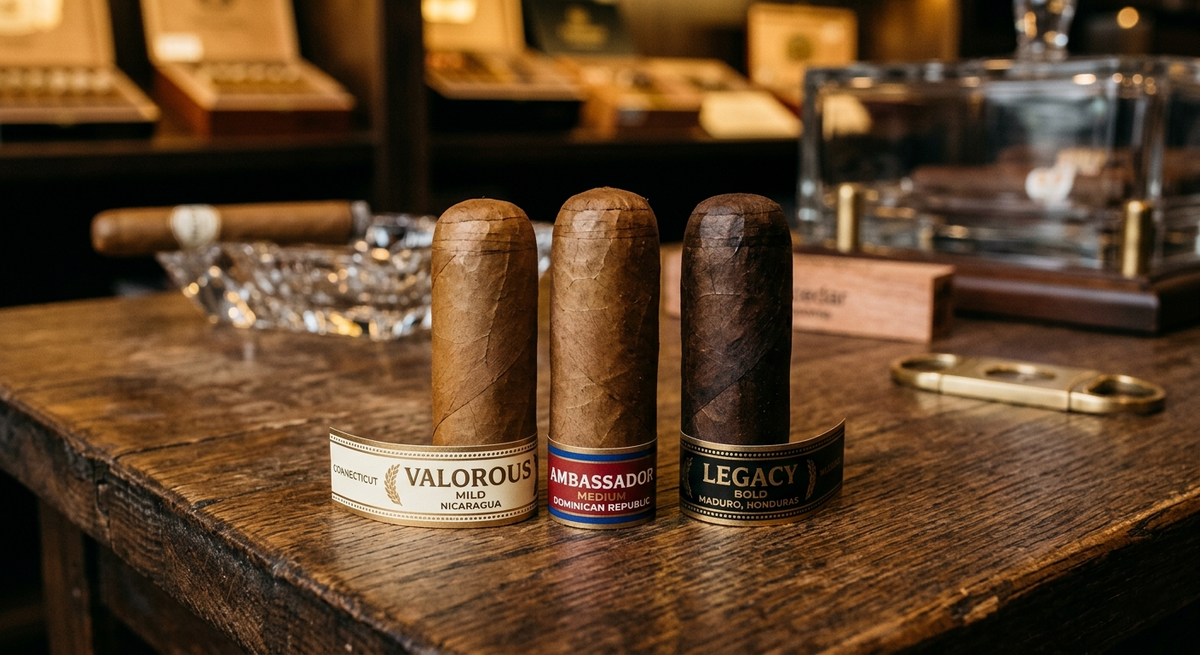
Connecticut Shade — pale, golden, mild, creamy. Grown under cheesecloth tents (the "shade") to produce a delicate leaf. Common on milder cigars like the Romeo y Julieta Reserva Real and the Nub Connecticut.
Habano (Ecuadorian or Nicaraguan) — medium brown, earthy, peppery. Sun-grown for more intensity.
Maduro — dark brown to nearly black, sweet, rich. The "maduro" comes from extended fermentation that breaks down sugars in the leaf and concentrates flavor. Found on rich, full-bodied cigars like the Padron 1926 Maduro.
Cameroon — slightly toothy texture, sweet-woody, distinctive. Grown in West Africa. Used on cigars like the Nub Cameroon.
Connecticut Broadleaf — dark, oily, often used as a maduro wrapper on American-blended cigars.
When you walk into a shop and someone asks "what wrapper do you like?" — that's the language they're speaking. If you don't know the answer yet, the shorter version is: lighter wrappers (Connecticut Shade) are usually milder; darker wrappers (Maduro) are usually richer.

The Strength Question (And Why It's Often Misleading)
Cigars are typically labeled mild, medium, or full bodied. People assume this means weak / moderate / strong, like coffee. That's only partially right.
Body in cigar terms refers to the weight and intensity of the smoke on your palate, not necessarily the nicotine content. A mild cigar can be intensely flavored — the Romeo y Julieta Reserva Real, for example, is mild-bodied but full-flavored. A full-bodied cigar isn't always overwhelming — the Padron 1964 Anniversary line is medium-full but balanced and refined.
Strength (the nicotine kick) is a separate dimension. A cigar can be mild bodied with high nicotine, or full bodied with surprisingly low nicotine. Two cigars labeled "full" by different brands can feel completely different.
The practical guidance: if you're new to premium cigars, start mild-to-medium bodied with a Connecticut Shade or Cameroon wrapper. The Romeo y Julieta Reserva Real Robusto, the Padron Damaso No. 17 Churchill, or the Nub Connecticut 460 are all good entry points. If you find yourself wanting more intensity after a few cigars, step up to medium-bodied options like the Padron 1964 Exclusivo Natural. Save the full-bodied 1926 Maduros and 40th Anniversaries for once you've calibrated your palate — they're spectacular cigars, but they'll overwhelm a beginner.
Eat first. Drink water alongside. Don't rush.

Storage: The Most Underrated Part of Buying Cigars in California
This is where most new cigar buyers in Santa Monica go wrong. They buy a beautiful $25 cigar, take it home, leave it on a kitchen counter, smoke it three days later, and wonder why it tasted harsh and burned hot. The answer is almost always humidity.
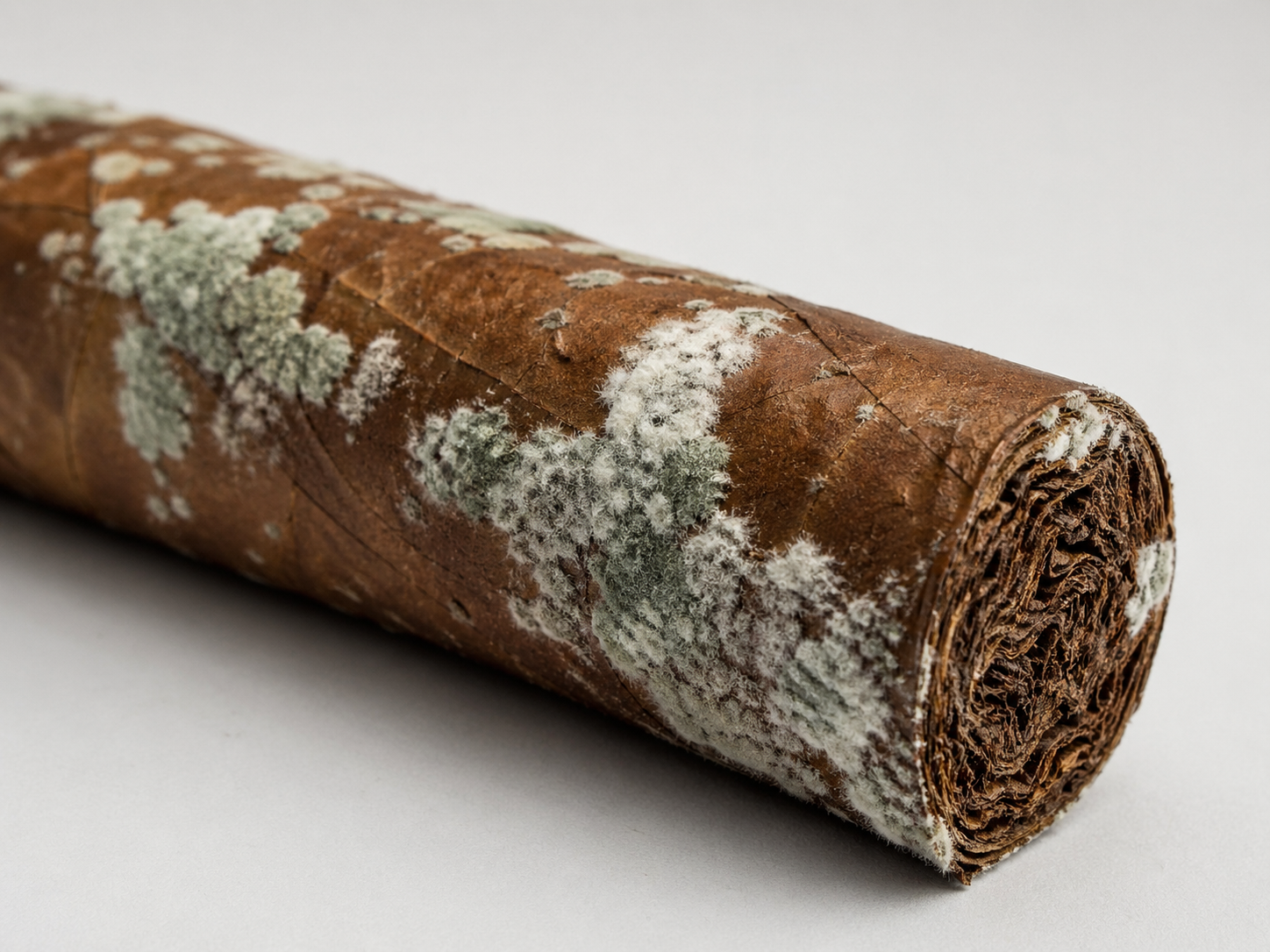
Premium cigars need to be stored at 65–70% relative humidity and ideally between 65 and 70°F. Below that humidity, the wrapper dries, contracts, and cracks; the burn becomes uneven; the flavor turns harsh. Above that humidity, mold becomes a real risk. The sweet spot is narrow.
For SoCal residents, the practical options are:
A traditional Spanish cedar humidor — a wooden box (Spanish cedar interior is standard) with a humidification device (Boveda packs are the modern best-in-class option). Capacity ranges from 25 to 500+ cigars. A good 50-count humidor with Boveda packs runs $100–250 and lasts a lifetime. Season it before first use.
Boveda 65% packs in any sealed container — a Tupperware-style container with a Boveda pack inside is a perfectly serviceable humidor for a small collection. Cigar storage doesn't require romance; it requires humidity stability.
Wineador (electric) — a temperature-controlled cabinet that doubles as a wine fridge. For collections over 200 cigars or for serious aging, a wineador is the move. $400–1,500 depending on size.
The wrong answer: leaving cigars in cellophane on a desk, in a drawer, or in a non-humidified box. Cigar cellophane is permeable. The cigar will dry out.
We include a fresh Boveda 65% pack in every shipment we send, but that's a short-term measure for transit and a few weeks of storage — not a permanent solution. If you're buying premium cigars regularly, invest in a real humidor or a Boveda-controlled container. It's the cheapest thing you can do to dramatically improve your smoking experience.

How to Choose Your First Premium Cigar
If you're new to premium cigars, the choice can feel paralyzing. There are thousands of SKUs across hundreds of brands. Here's the framework we use when someone walks into our shop and asks where to start.
Step 1: Pick your time commitment. A robusto (5 × 50) takes 60–75 minutes. A toro (6 × 52) takes 75–90 minutes. A Churchill or Magnum (7+ inches) takes 90–120 minutes. A petit corona (4½ × 46) or a Nub format (4 × 60) takes 30–60 minutes. Be honest about how much time you actually have. A great cigar smoked too fast is wasted.
Step 2: Pick your strength. New smokers should start with mild to medium-bodied cigars. The Padron Damaso No. 17 Churchill, Romeo y Julieta Reserva Real Robusto, and Nub Connecticut 460 are all good starting points. After a few cigars, you'll know if you want to step up.
Step 3: Pick a wrapper character. Connecticut Shade for cream and cedar. Habano for pepper and earth. Cameroon for sweet wood. Maduro for cocoa and dark sweetness.
Step 4: Pick a price point. Premium cigars range from roughly $8 to $40 per stick. The $12–$20 range is where you'll find most of the quality-to-value sweet spots — the Padron 1964 line, the Romeo y Julieta Reserva Real line, the Nub line all sit in this range. Above $25, you're paying for limited production and exceptional aging — the Padron 1926 line and the 40th Anniversary line live here.
Step 5: Pair it intentionally. A cigar pairs best with drinks that match its body. Mild cigars: light coffee, champagne, chardonnay. Medium cigars: bourbon, single malt Scotch, espresso. Full-bodied cigars: peated Scotch, aged rum, dark coffee. Avoid sweet cocktails — sugar fights tobacco.
If you walk into a real cigar shop, the staff will run through this same framework with you in about 90 seconds. That's the value proposition of working with a curated shop instead of a warehouse retailer — you get the personalized recommendation, not just the catalog.

What to Look for in a Cigar Shop (in Santa Monica or Anywhere)
A few simple tests will tell you whether you're in a real premium cigar shop or a glorified convenience store with a humidor:
Climate control. A real cigar shop maintains a walk-in humidor or display humidor at 65–70% humidity. You should be able to see a hygrometer. If you don't feel slightly damp air when you step into the humidor, walk out.
Stock turnover. Premium cigars are perishable, even when stored properly. A shop that moves through inventory regularly carries fresh stock; a shop with the same dusty boxes you saw last year carries old stock. Ask when their last shipment came in. If they don't know, it's the wrong shop.
Knowledgeable staff. Ask the person behind the counter what their personal favorite cigar is, and why. If the answer is genuine and specific ("the 1964 Exclusivo Natural — I smoke one every Sunday after dinner because the cedar pairs perfectly with my coffee"), you're in the right place. If the answer is "everything's good," you're not.
Honest pricing. Premium cigars are MSRP-stable across most U.S. retailers. Massive markdowns ("60% off Padron!") are usually a sign of liquidating old, dried-out stock. A serious shop charges what cigars are worth and stands by the freshness.
Curation, not just volume. A good shop has a perspective. They've chosen what to carry — and what not to carry — based on quality. If a shop has every brand under the sun, they probably haven't actually evaluated any of them.
These are the standards we've held ourselves to since opening, and they're the standards we'd hold any cigar shop to. Find a shop you trust and stick with them. The relationship matters.
A Few Brands Worth Knowing
If you're new to the premium cigar world, here's a quick orientation to a handful of the brands you'll encounter most often. None of these are sponsored — they're the brands that consistently deliver across price points.
Padron — Cuban-style Nicaraguan cigars, family-owned and operated since 1964 in Estelí, Nicaragua. Famous for box-pressed construction and impeccable consistency. Their lines (Padron Series, Damaso, 1964 Anniversary, 1926 Anniversary, 40th Anniversary) span every price point and strength level. The 1964 line is the workhorse; the 1926 is the flagship; the 40th Anniversary is the special-occasion gem.
Romeo y Julieta — One of the oldest cigar names in the world. The non-Cuban version, made by Altadis in Honduras, is consistently smooth and well-constructed. The Reserva Real line is their premium tier and a great introduction to medium-bodied premium cigars.
Oliva / Nub — Oliva makes some of the best Nicaraguan cigars at every price point. The Nub line (designed by Sam Leccia) takes the "sweet spot" middle of a longer cigar and packages it as a short, fat 4×60 — efficient flavor in less time.
Davidoff — Swiss-owned, ultra-premium, made in the Dominican Republic. Refined, expensive, world-class construction. The aspirational tier.
Arturo Fuente — Family-owned Dominican brand. The OpusX is one of the most decorated cigars in the world. Their everyday lines (Hemingway, Don Carlos) are exceptional.
Tatuaje — Boutique Nicaraguan cigars from Pete Johnson. Bold, creative blends. The Reserva line is exceptional.
If you remember nothing else: Padron for consistency, Romeo y Julieta for smoothness, Oliva for value, Drew Estate for boldness. Start there.

Where to Buy Premium Cigars in Santa Monica
You have three options for buying premium cigars locally: a brick-and-mortar specialty shop, an online retailer, or a tobacco store that happens to carry some cigars.
The third option is almost never the right choice for premium cigars. Convenience stores and gas stations don't maintain humidity, don't rotate inventory, and don't have the staff knowledge to guide your selection.
The second option (online retailers) is fine if you know exactly what you want and you're willing to gamble on freshness. The big online cigar retailers compete almost entirely on price, which means inventory sits in warehouses, ships in non-humidified packaging, and arrives at your door drier than it should. If you're buying a $40 box of Padron 1964s, the difference between a properly-humidified shipment and a casual one is the difference between a great smoke and a wasted box.
The first option (a brick-and-mortar specialty shop) gives you something the others can't: someone who can match a cigar to your taste, your time, your occasion. Plus the chance to actually walk into a humidor, see and smell what you're considering, and learn from the people who handle these products every day.
If you're in Santa Monica and you're looking for that experience: that's us. Santa Monica Cigars, 120 Broadway Suite 103. Walk-in welcome, no appointment needed. We're open seven days a week. Our humidor is climate-controlled, our inventory is hand-selected, and every cigar we sell ships with a fresh Boveda pack. You can shop online at santamonicacigars.com with free shipping over $50, or come in and we'll walk you through the catalog in person.
We don't carry every brand on the market — only the ones we actually smoke and stand behind. If we don't have what you're looking for, we'll tell you honestly and recommend where to find it.
The Short Version
If you skipped to the bottom: buying premium cigars in Santa Monica is a different experience than buying them anywhere else. California's taxes raise prices, the dry climate punishes poor storage, and the local audience expects expertise. The right shop should have climate control, fresh stock, knowledgeable staff, and a curated perspective. Start with mild-to-medium cigars, invest in proper storage, and don't rush the experience.
If you have questions — about a specific cigar, about how to start a humidor, about what to bring to a wedding or a special occasion — come see us, call (310) 310-8328, or message through our website. We answer.
Welcome to premium cigars. There's a lot to learn, and it's worth every minute.